SunLoanTodayRequest a loan

Compare credit cards for building credit

Each card's fees and APR are shown before you click. The issuer reviews your application and decides, and approval is not certain.Fees and APR up front. The issuer decides.

Updated November 2026

Paid partner offers. Advertiser disclosure

Cash back
Unsecured credit card

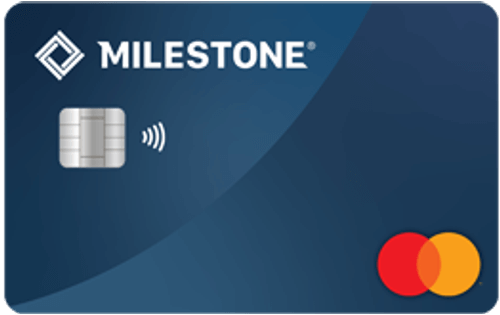
Milestone Mastercard, 1.5% cash back

Unlimited 1.5% cash back while you rebuild

An unsecured Mastercard from The Bank of Missouri that pays 1.5% cash back on purchases. The limit is smaller and fees still apply, so run the numbers.

  • Unlimited 1.5% cash back on purchases
  • Credit limit up to $700 if approved
  • No security deposit

Cost$175 annual fee in year one, then $49 plus $12.50 a month. APR around 35.9%.

Partner offer. Fees, APR and limit vary by applicant, and approval is not certain. Read the issuer's terms before you apply.

Unsecured credit card

Milestone Mastercard, $1,000 limit

A limit up to $1,000 with no security deposit

An unsecured Mastercard issued by The Bank of Missouri for people building or rebuilding credit. It has no rewards and the fees are high, so read them first.

  • Credit limit up to $1,000 if approved
  • No security deposit
  • Payments reported to all three credit bureaus

Cost$250 annual fee in year one, then $99 plus $19.25 a month. APR around 35.9%.

Partner offer. Fees, APR and limit vary by applicant, and approval is not certain. Read the issuer's terms before you apply.

Unsecured credit card

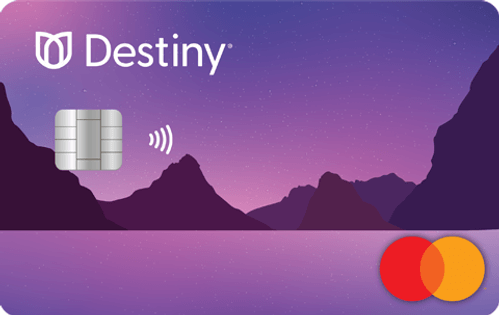
Destiny Mastercard, $1,000 limit

A $1,000 starting limit if approved

An unsecured Mastercard issued by The Bank of Missouri with a $1,000 credit limit if you are approved. There is no deposit, and no cash back is listed.

  • $1,000 credit limit if approved
  • No security deposit
  • Payments reported to all three credit bureaus

Cost$250 annual fee in year one, then $99 plus $19.25 a month. APR around 35.9%.

Partner offer. Fees, APR and limit vary by applicant, and approval is not certain. Read the issuer's terms before you apply.

View Destiny Card Offer (opens in a new tab)Opens the issuer's secure application in a new tab.Our notes on Destiny $1,000

SunLoanToday may be paid when you click a partner link, which can affect which partners appear and their order. A Featured label marks a partner we are promoting. It is not a ranking. We do not list every company. Advertiser disclosure

Today

A few minutes

  • Read the cost line on each card above. It lists the annual fee, the monthly fee and the APR.
  • Open the issuer's page to see the terms that apply to you.

On your own time

Before you decide

  • Add up two years of fees with .
  • Price a secured card or a credit union card first. Many cost less.
  • Apply for one card at a time. Each application can mean a credit check.

Key points

  • A card can build credit when the issuer reports it to the credit bureaus, you pay on time and you keep the balance low.
  • Unsecured cards for building credit often charge an annual fee plus a monthly fee. Add up two years of fees before you apply.
  • If you can set aside a deposit, price a secured card or a credit union card first. They often cost less than a card with annual and monthly fees.

How a card helps build credit

A credit card can help your credit only if the issuer reports the account to the credit bureaus: Equifax, Experian and TransUnion. Check the issuer's terms for that line. After that, two habits do most of the work.

  • Pay on time, every time. The CFPB says most credit scores treat repayment history as the number one factor. A late payment can stay on your credit report for seven years.
  • Keep the balance low. The CFPB says many experts recommend using less than 30% of your total credit limit. On a $500 limit, that is under $150.

What a fee-heavy unsecured card costs over two years

The cards on this page are unsecured, so none asks for a deposit. The price is in the fees, which are listed in each card's offer details. Look for two: an annual fee billed when the account opens, and a monthly fee that starts in year two. The first fee goes on the card, so it uses part of your limit on day one.

Example: two years of fees on an $800 limit

Annual fee, year one
$200
Annual fee, year two
$80
Monthly fee in year two, $15 x 12
$180
Total fees over two years
$460
Credit left on day one, $800 minus $200
$600

Round example numbers, not the terms of any card on this page. Each card's real fees and APR are listed in the offer details. Interest is extra if you carry a balance.

Federal rules cap the fees an issuer can require in the first year at 25% of your starting credit limit. In the example, $200 is exactly 25% of $800. Late fees and returned payment fees are outside the cap, and the cap ends after the first year. That is one reason a monthly fee may not start until year two.

Secured or unsecured: compare before you pick

Two kinds of credit-building cards
Secured cardUnsecured card
DepositYes, often equal to your limitNone
Money back laterUsually the deposit, when you pay off and close the accountNone. Fees are a cost
FeesVary by card. Check for annual and monthly feesOften an annual fee plus a monthly fee
Builds creditIf the issuer reports to the bureausIf the issuer reports to the bureaus

What to check in the issuer's terms before you apply

The offer details here come from information we received. The issuer's own terms are the ones that count, and fees, APRs and limits vary by applicant. Before you apply, find these lines in the issuer's rates and fees table.

  • Annual fee: the amount in year one and the amount after that.
  • Monthly fee: the amount, the month it starts and the yearly total.
  • APR: the yearly interest rate for purchases and for cash advances.
  • Credit limit: a limit shown as up to a number is a ceiling. Yours may be lower.
  • Bureau reporting: all three bureaus should be named.
  • Other fees: late payment, returned payment, cash advance and extra card fees.

When you apply, the issuer reviews your application and may pull your credit report. Approval is not certain. For the method behind the example above, read . To see what a carried balance adds, use the .

Questions people ask

Will applying for a card affect my credit?

It can. The issuer reviews your application and may pull your credit report, which can show up as a hard inquiry. The CFPB says hard inquiries affect credit scores, so apply only for a card you plan to use.

Is approval certain?

No. The issuer decides, using its own rules for creditworthiness, ability to pay and identity. Fees, APRs and credit limits also vary by applicant, so the terms you are offered can differ from the ones listed here.

How long does it take to build credit with a card?

FICO says it cannot produce a score until at least one of your accounts has been reported to a credit bureau for six months. After that, a score moves slowly as on-time payments add up. No card can promise a score or a date.

Why is my available credit lower than my limit on day one?

Many cards with high fees bill the first annual fee to the account when it opens. For example, a $200 fee on an $800 limit leaves $600 to spend until you pay the fee off. The fee also counts as a balance, so pay it when the first statement arrives.

Is a secured card cheaper than an unsecured card?

Often, yes, when the unsecured card charges an annual fee plus a monthly fee. A secured card takes a deposit that you usually get back when you pay off and close the account. Secured cards can still charge fees and high interest, so add up the cost of each one.

Do I need to carry a balance to build credit?

No. The CFPB says you do not need to carry a balance, or any debt at all, to get a good score. Paying in full each month keeps your balance low and, on most cards, avoids interest on purchases.

Does SunLoanToday issue these cards?

No. SunLoanToday is a comparison and referral site. It is not a bank or card issuer and does not make credit decisions. We may be paid when you click through to a partner, and the issuer handles your application.

Ready to look at the credit cards offers again?

Back to the offers

Sources

  1. CFPB: How do I get and keep a good credit score?
  2. CFPB: How to rebuild your credit
  3. CFPB: Regulation Z, section 1026.52, Limitations on fees
  4. CFPB: What is a credit inquiry?
  5. FTC: Comparing Credit, Charge, Secured Credit, Debit, or Prepaid Cards
  6. myFICO: How can I start building my credit history?
  7. NCUA: NCUA Board Extends Loan Interest Rate Ceiling

Card terms, fees, APRs and credit limits are set by the issuer and vary by applicant. Applications are subject to the issuer's review, which may include obtaining your credit report, and approval is not certain. Read the issuer's terms before you apply. SunLoanToday is not the card issuer and may be paid when you click through to a partner. See the advertiser disclosure. Card details on this page were gathered by SunLoanToday from the offer information we received and have not been reviewed or approved by the card issuers.